A few weeks ago Gary Lineker was pulled from his Saturday presenting position and most of the BBC’s sports programs canceled as other BBC sports presenters and production teams stood down in solidarity.
Why? Because he dared to comment regarding the Government’s plans to address small boat migrant crossing. It appears Mr. Lineker’s views were against the BBC’s impartiality rules.
Was he wrong? Well, I feel the Government needs to re-evaluate its stance. Sweeping legislation that affects people who are trying to escape situations we can hardly conceive of can never be the right thing? Surely case by case is more humane than all being tarred with the same brush.
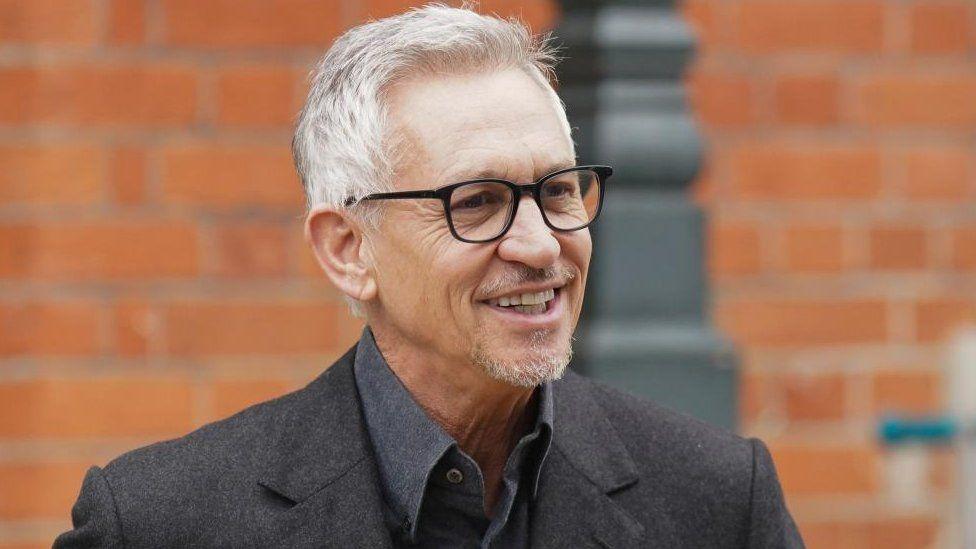
Mr. Lineker is said to be the BBC’s biggest earner. But he’s a freelance contractor with the BBC so it’s fair to say his loyalties are wider in scope. He is also prepared to put his money where his mouth is. He has allegedly taken refugees into his own home. Far from being a celebrity jumping on a bandwagon, this is a human being stating his personal belief about
injustices meted out to desperate people. To my mind this does not conflict with his required impartial view of a sports game. But it highlights the power of social media and the blurring between work and personal personas.
At work the other day I saw one of our Fast Food Retail operators making a crepe with one hand and texting with the other. It was then I saw an opportunity! I began to convert our training materials into videos that could be accessed on a phone. Now every site and department has a WhatsApp to pass on the information and give general updates or comments.

Phones have other roles too. Many an employee calling in sick in the morning has clearly forgotten their 3 am Instagram pictures celebrating in the nightclub, or requesting a holiday over a bank holiday to visit sick relatives only to be seen in pictures at their football ground waving a team scarf.
But as with all technology social media morphs and advances in its scope and its abilities. It grows, like a creeper entwining itself into and around every aspect of our lives. In my role, I do quite a lot of one-to-one support and counseling and it is clear a lot of the anxiety and issues affecting some of our younger employees can be traced to some impact of social media.
Body issues are an example. We can all want to emulate someone else if we have respect for their beliefs or life choices. But when the focus of our emulation is body image, social media can mislead and distort. Many of the pictures we are presented with appear perfect due to filtering and editing. This creates a deceptively false profile of a person and increasingly this kind of ‘deep fake’ technology means we can’t even be sure it is that person at all. I have had to get involved in workplace investigations where social media disputes have not been about content but about who actually sent the messages. WhatsApp messages can be faked, who knew?
How long before an employee accused of an act on this day at this time, can allege with confidence that they were somewhere else? A little online deep fakery might just do the trick! Thank goodness workplace cases come under Civil Law where we need to prove only ‘on the balance of probability’ (it more than likely happened based on the evidence collated) not ‘beyond reasonable doubt’ as in a criminal case! Mr. Lineker used his profile to give voice to those that can’t be heard. He’s used social media as a force for good. Let’s hope the story ends there and that others can be as wise.


 Mannix HR