Nudge Theory – I have to be honest I am fascinated by the concept.
It came to prominence around 2008 in a book called Nudge: Improving Decisions about Health, Wealth, and Happiness by Richard Thaler and Cass Sunstein. They defined their concept as the following:
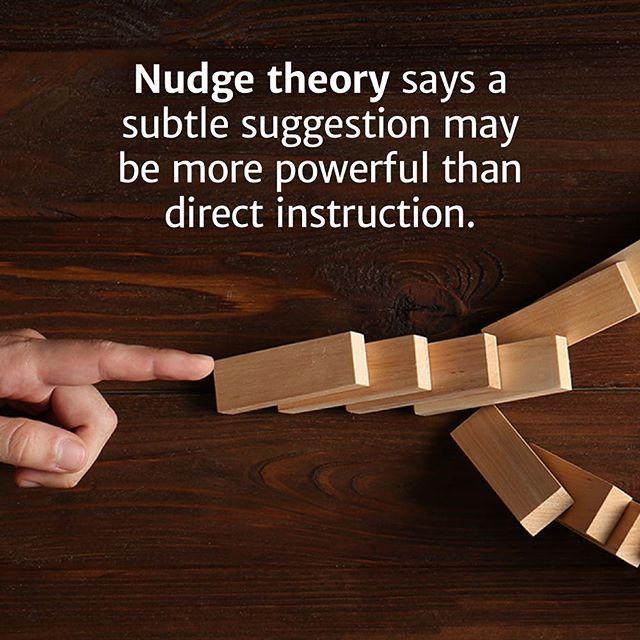
“A nudge, as we will use the term, is any aspect of the choice architecture that alters people’s behaviour in a predictable way without forbidding any options or significantly changing their economic incentives. To count as a mere nudge, the intervention must be easy and cheap to avoid. Nudges are not mandates. Putting fruit at eye level counts as a nudge. Banning junk food does not.”
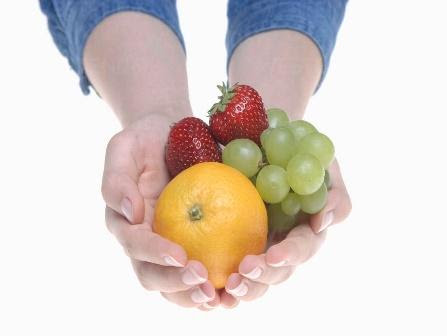
Choice architecture is the design of different ways to make choices for the decision-maker. We face this all the time without really realising it. The draw toward healthier options in our food choices is an example, putting fruit next to tills worked in the Netherlands for example.
One of the more unique examples works on the use of urinals. Any users of such facilities may find a fly in the ceramic near the base of the bowl (not a real one, just a picture!). It’s not there to look snazzy. No, it’s to help you guide your aim. You didn’t realise this? Well, you do now!
I think my fascination came from reflecting on someone I once knew. They were an absolute master at this concept but at the time I was oblivious. While this manipulation was quite unnerving the skill, which I believe was a natural ability for him, was incredible.
I’ll give a random example of how someone can nudge you. You and your flatmate want to paint the lounge, and you both decide it will either be pale yellow or cream.
“It’s up to you” – says your housemate – “I’m easy, pick whichever you prefer. If it were me I’d go for cream, my mate had this yellow and he says it gave him migraines after a while, plus I think I read somewhere cream is a calming colour, it would really help your stress levels, you know the ones you told me were so high yesterday. But like I say it’s up to you.”
Even the Government got in on the act with David Cameron creating the Behavioural Insights Team or ‘Nudge Unit’ in 2010 although in her BBC paper ‘Does nudge theory work after all?’ in 2022, Magda Osman argued that it was a waste of Government time as there were apparently ‘no examples of it being successfully done in history’.
But, as I have highlighted, in domestic use it appears it can be successfully implemented. The key is that it’s subtle, it isn’t forced, it’s a subtle coercion.
In retail and hospitality, it’s a very prevalent, social proof heuristic which is when an individual’s attention is drawn towards a particular option, that option then becomes more salient to the individual and they will be more likely to choose that option.
An example in restaurants is seating customers in window seats, especially if it’s quiet, it directs others to see people sitting and eating and to think of going in.
Products placed on supermarket shelves, and where they are located, it’s not random you know, it’s to influence choice.
In my business, we strive to upsell as it can make a significant difference to the bottom line. It is to my mind a form of nudge theory as you subtly offer the customer additional items or bigger portions. It’s still their choice but if they accept you’re simply giving them an option they would have picked. They just hadn’t considered it until ‘nudged’.
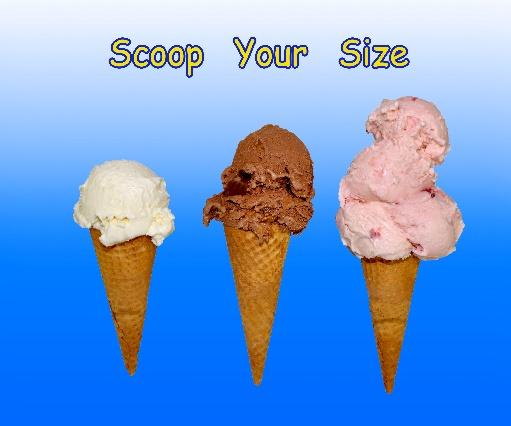
Back in the mid-eighties I was an ice cream man. (I’m bound to come back to this in future blogs, I learned so much in that job). We had three sizes of ice cream cornet: small, medium, and large. I learned my sales increased dramatically when, if asked for a cornet I simply replied, ‘Is that large?’
Now if they didn’t want a large they could say so, see, subtle, I’d also hold the flake next to the finished ice cream topped cornet (if one hadn’t been asked for) and ask if they wanted, it most often nudged a yes.
It appears nudge theory formed around 1995, I was an ice cream man from 1987 to 1991, so does that mean I invented nudge theory?

 Mannix HR